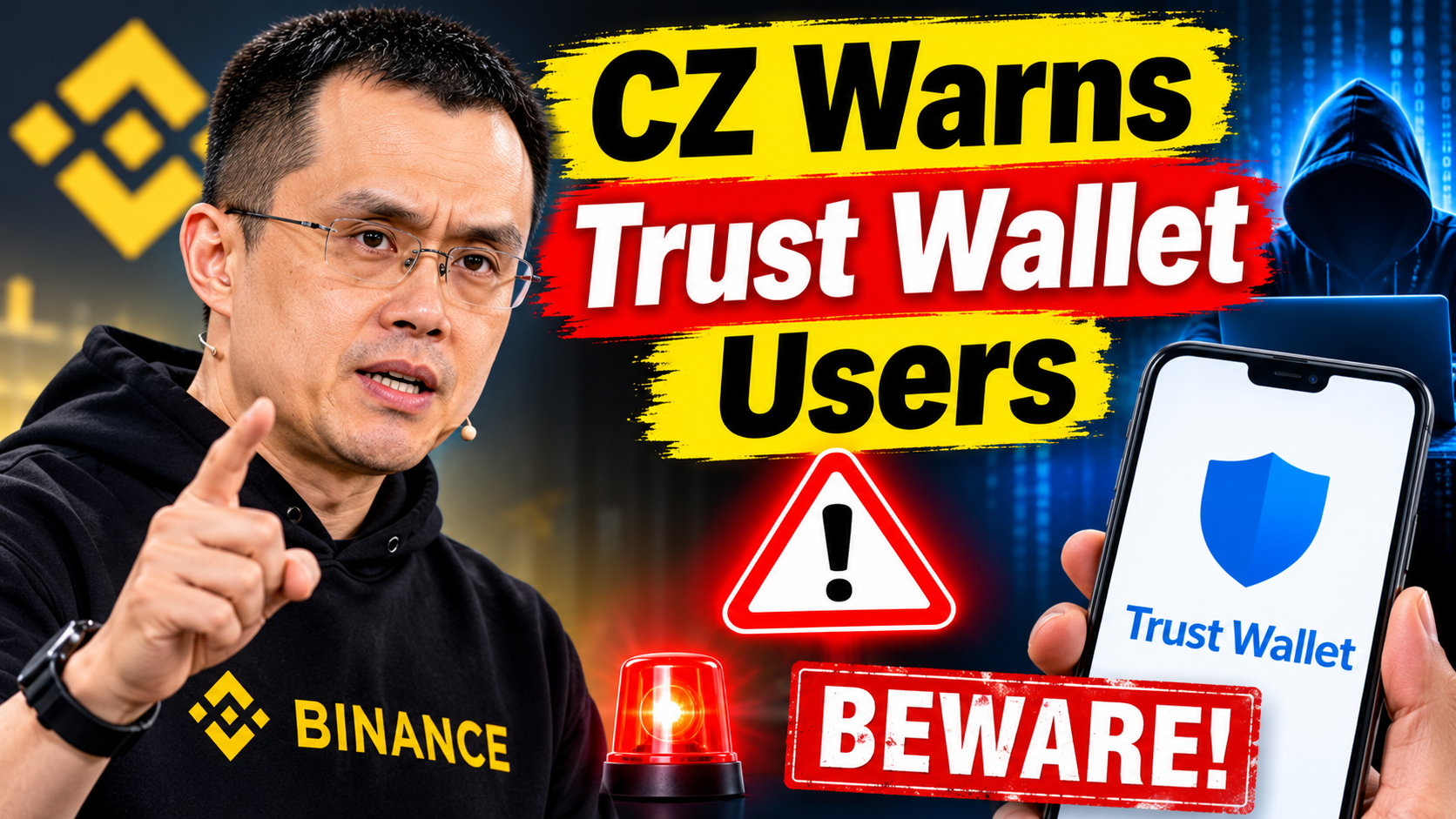
Binance founder Changpeng Zhao has warned cryptocurrency users about fraudulent Trust Wallet websites designed to exploit wallet connections and steal digital assets. The latest warning highlights growing phishing risks for self-custody wallet users, including investors in India.
Trust Wallet Fake Website Targets Crypto Users Through Wallet Connections
Binance co-founder and former CEO Changpeng Zhao (CZ) has issued a security warning after researchers identified a fraudulent website impersonating Trust Wallet. The website attempts to convince cryptocurrency holders to connect their digital wallets under the pretext of reviewing or managing cryptocurrency transfers.
CZ shared a warning originally highlighted by cybersecurity researcher Anurag, who operates the Malwarehunter account on X. He urged cryptocurrency users to carefully examine website addresses before connecting their wallets.
The fraudulent website operates through the domain trastwallet[.]cam, which closely resembles Trust Wallet’s legitimate domain, trustwallet.com. The difference is subtle but important: the fake website replaces the letter ‘u’ with ‘a’ and uses the ‘.cam’ extension instead of ‘.com’.
CZ highlighted the difference in a warning to users, saying that ‘.cam’ is not ‘.com’ and advising the community to remain cautious.
The incident demonstrates how cybercriminals increasingly use domain impersonation, fraudulent interfaces and malicious scripts to target cryptocurrency holders.
How the Fake Trust Wallet Website Attempts to Steal Cryptocurrency
According to Anurag’s investigation, the fraudulent website contains malicious JavaScript code designed to interact with multiple cryptocurrency wallets, including Trust Wallet, Phantom and OKX Wallet.
The website presents itself as a service that allows users to review their cryptocurrency transfers. Visitors are encouraged to connect their wallets to access the supposed service.
However, the underlying code has a different purpose.
Once a user connects a wallet, the website can scan its cryptocurrency balances through a backend application programming interface (API). It can then prepare transfers to predetermined wallet addresses controlled by the attackers.
Researchers identified two major components within the malicious setup: a wallet-scanning endpoint and a JavaScript integration file responsible for handling wallet connections.
The website also displays a payment-card-style interface and information about transfer limits, network fees and wallet authorisation. This presentation makes the fraudulent service appear more legitimate to unsuspecting visitors.
Importantly, the researcher reported that the transaction-signing functionality was disabled when the website was examined. Therefore, the identified version could scan balances and prepare transfers, but researchers had not established that it could successfully execute those transactions at that time.
No confirmed financial losses directly linked to this particular phishing domain had been established in the available findings.
Nevertheless, the presence of transaction-preparation functionality makes the website a significant security concern.
Separate $1.1 Million Exploit Raises iPhone Security Concerns
Alongside the fake website warning, separate reports have raised concerns about an alleged $1.1 million cryptocurrency theft involving Trust Wallet users and devices running Apple’s iOS 18.5 operating system.
The claim circulated on November 5 through the X account Emperor.SOL, which alleged that an attacker had stolen approximately $1.1 million from cryptocurrency users by exploiting vulnerabilities affecting older iPhone software.
According to the post, the attack could potentially expose wallet recovery phrases stored or accessed through affected devices.
The account also shared a warning attributed to Trust Wallet support, advising users to update their iPhone operating systems as soon as possible.
Screenshots accompanying the claims showed cryptocurrency transfers involving Binance deposit addresses and hot wallets. Some displayed transactions included 500,000 USDT, 100,000 USDT and 190,000 USDT.
However, these screenshots do not independently establish that the displayed transactions were connected to the alleged iOS vulnerability.
It is important to distinguish between the two developments: the fraudulent website has been examined by a security researcher, while the reported $1.1 million iOS-related theft remains a separate allegation. A confirmed technical link between the two incidents has not been established.
The allegations nevertheless highlight the importance of smartphone security for cryptocurrency investors, particularly those who manage significant digital asset holdings through mobile wallets.
Previous iPhone Vulnerabilities Have Also Threatened Crypto Wallets
The latest allegations come amid broader concerns about vulnerabilities affecting smartphone operating systems and cryptocurrency applications.
In March 2026, researchers associated with Google, Lookout and iVerify identified an exploit framework known as DarkSword, which targeted vulnerable iPhones through compromised websites.
The researchers warned that the exploit could expose sensitive information, including cryptocurrency wallet data, on affected devices.
Apple subsequently addressed the identified vulnerabilities through software updates and advised users to keep their devices updated.
Another concern involves older iPhone models with hardware-level security weaknesses. On November 1, OneKey founder Yishi Wang highlighted potential vulnerabilities affecting devices ranging from the iPhone 4S to the iPhone 11 and the second-generation iPhone SE.
Some hardware-related vulnerabilities cannot necessarily be resolved through ordinary software updates. Cryptocurrency holders who may have exposed their recovery phrases on vulnerable devices should consider migrating their assets to a newly secured wallet with a fresh recovery phrase.
These developments underline an important point: cryptocurrency security depends not only on the wallet application but also on the security of the device, operating system and websites used to access digital assets.
Trust Wallet Faces Growing Security Concerns
The latest warnings follow several security complaints and phishing incidents involving Trust Wallet users.
On November 4, a cryptocurrency user named Iaroslav Dubovoi reported losing 3,830 USDT from his Trust Wallet without receiving a transaction approval request or security warning.
He claimed that he discovered the missing funds after opening the application and later identified blockchain records showing that the cryptocurrency had been transferred.
Another user alleged that someone impersonating a support representative on the NEAR Protocol Discord server had drained his Trust Wallet. The reported transactions involved several cryptocurrencies, including ETH, BTC, BNB and NEAR.
However, the exact technical cause of these individual incidents has not been independently established.
Trust Wallet had also warned users about a fraudulent cryptocurrency payment-card website on October 28. The website used the company’s branding to advertise attractive benefits, including a $100,000 spending limit, cashback rewards of up to 8% and a card issuance fee of just $1.
The fraudulent platform required users to connect their cryptocurrency wallets to access the advertised services. Trust Wallet’s security team subsequently clarified that the website was not affiliated with the company.
The platform also experienced a significant browser extension security incident in December 2025. A compromised version, 2.68, of its Chrome browser extension contained malicious code that exposed sensitive wallet information and enabled attackers to steal cryptocurrency.
The incident resulted in millions of dollars in reported losses. CZ subsequently said affected users would receive compensation.
Together, these developments highlight the growing sophistication of attacks targeting cryptocurrency users, particularly those relying on self-custody wallets.
What the Latest Trust Wallet Warning Means for Indian Crypto Investors
The latest developments deserve particular attention from Indian cryptocurrency investors, as mobile wallets and self-custody solutions are widely used to manage digital assets across different blockchain networks.
Many Indian investors use wallets such as Trust Wallet, Phantom and OKX Wallet to hold Bitcoin, Ethereum, BNB, Solana-based tokens and stablecoins such as USDT.
While self-custody provides investors with greater control over their private keys and digital assets, it also transfers responsibility for wallet security directly to the user.
Unlike traditional banking transactions, cryptocurrency transfers confirmed on public blockchains are generally irreversible. If an investor unknowingly approves a malicious transaction or exposes their recovery phrase, recovering the stolen assets can become extremely difficult.
The latest phishing campaign also demonstrates that scammers are no longer relying exclusively on fake investment schemes or promises of guaranteed returns. They are increasingly creating convincing copies of established cryptocurrency platforms to exploit users’ familiarity and trust.
For Indian investors, this creates several important risks:
1. Fake wallet verification websites: Investors should avoid websites claiming that they must connect their wallets to verify accounts, review transfers or prevent account suspension.
2. Recovery phrase theft: A wallet’s 12-word or 24-word recovery phrase should never be entered into an unfamiliar website or shared with anyone claiming to represent wallet support.
3. Malicious transaction approvals: Connecting a wallet does not automatically authorise the transfer of funds. However, signing malicious transactions or granting token-spending permissions can give attackers access to digital assets.
4. Smartphone security: Investors should install official operating system updates and download wallet applications only through verified sources. Users should also avoid storing recovery phrases in unprotected screenshots, cloud notes or messaging applications.
5. Fake customer support: Investors should be particularly careful with unsolicited Telegram, WhatsApp, Discord and social media messages offering wallet recovery or technical assistance.
Indian investors should also understand that keeping cryptocurrency in a self-custody wallet does not eliminate the risks associated with phishing, device compromise or malicious smart contracts.
How Indian Investors Can Protect Their Trust Wallet Holdings
The latest incidents make it important for cryptocurrency holders to follow basic security practices before interacting with any wallet-related website.
Here are some important precautions:
- Use the official website: Access Trust Wallet through its verified website, trustwallet.com, rather than links received through social media, advertisements or unsolicited messages.
- Verify website addresses: Check every character in a URL before entering information or connecting a wallet.
- Never disclose recovery phrases: Trust Wallet support representatives should never require users to disclose their private keys or recovery phrases.
- Review transaction requests: Carefully examine the network, recipient address, token amount and permissions before signing any transaction.
- Revoke suspicious permissions: If a wallet has granted suspicious token-spending permissions, investigate and revoke them using a trusted blockchain permission-management tool.
- Keep devices updated: Install security updates for iOS, Android and desktop operating systems through official device settings.
- Use a hardware wallet: Investors holding substantial cryptocurrency portfolios may consider hardware wallets to reduce exposure to online threats. However, hardware wallets do not eliminate phishing risks or protect users who disclose their recovery phrases.
If an Indian investor suspects that their wallet has been compromised, they should immediately stop interacting with the suspicious website, secure any unaffected wallets and preserve relevant transaction details and communications.
They can also report cryptocurrency-related cybercrime through India’s National Cyber Crime Reporting Portal or contact the national cybercrime helpline at 1930. The Indian government’s portal specifically provides reporting facilities for cryptocurrency crimes and online financial fraud. Cyber Crime India+1
Conclusion: Crypto Security Remains a Major Challenge for Self-Custody Investors
CZ’s latest warning highlights how easily cryptocurrency investors can be targeted through fraudulent websites that closely imitate established wallet providers.
The discovery of the trastwallet[.]cam domain, combined with separate allegations of a $1.1 million iOS-related cryptocurrency theft, has renewed concerns about the security of digital asset holdings.
Although the fake website’s transaction-signing functionality was reportedly disabled when researchers examined it, its ability to scan wallet balances and prepare transfers demonstrates the potential risks associated with malicious wallet integrations.
For Indian investors, the broader lesson is that cryptocurrency security requires more than choosing a trusted wallet. Users must also protect their devices, verify website addresses, understand transaction permissions and avoid sharing sensitive recovery information.
As cryptocurrency adoption expands, investor awareness and personal cybersecurity practices will remain essential to protecting digital assets.
Also read:- Canton Coin Gets SEC No-Action Relief as Digital Commodity: What It Means for Crypto Markets…