Visa’s latest initiative highlights the growing intersection of artificial intelligence, stablecoins and blockchain payments, potentially opening new opportunities for automated financial transactions and the digital asset ecosystem.
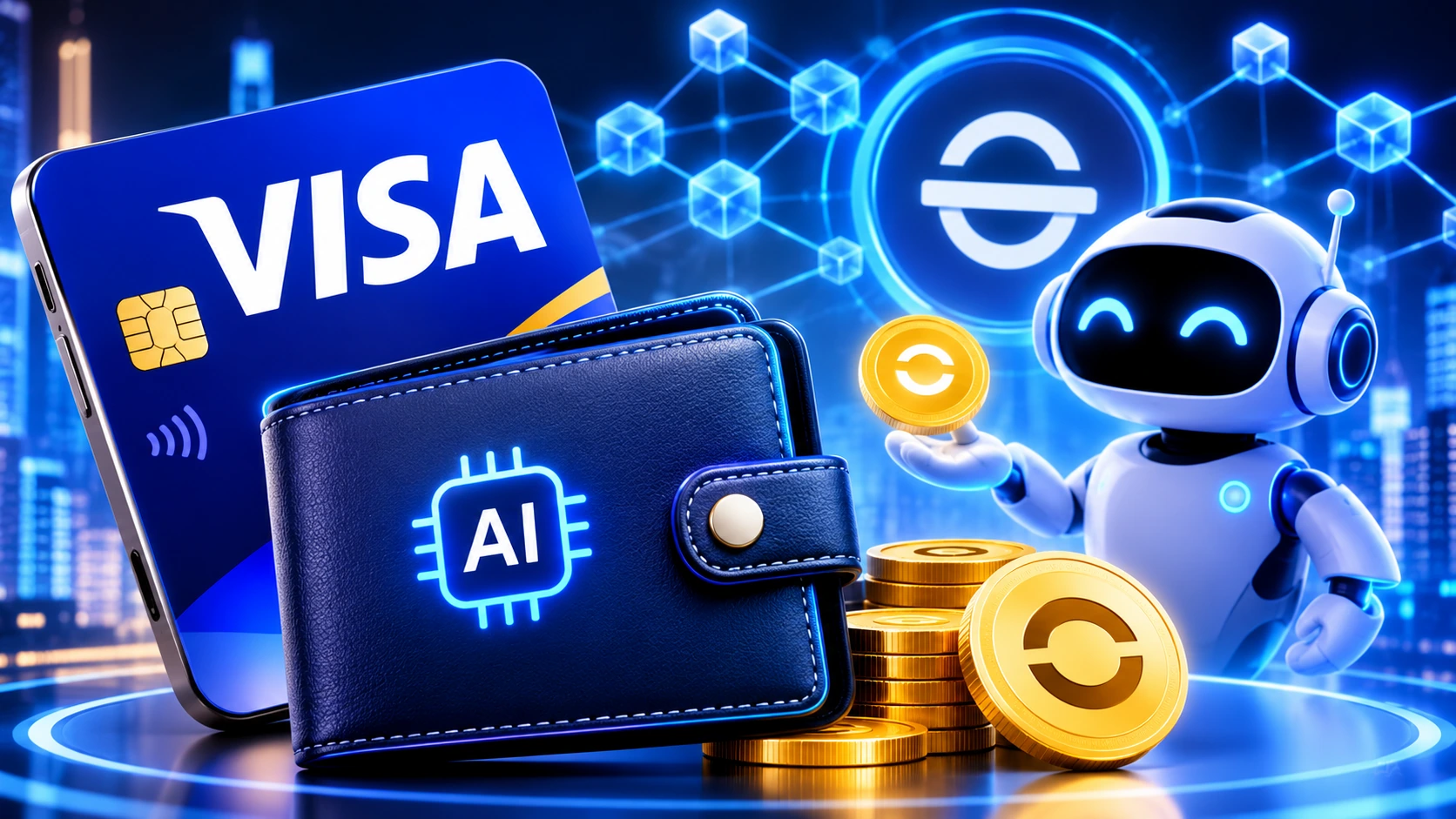
New Delhi, November 23, 2026: Visa Crypto Labs has introduced an experimental version of its Visa CLI platform, allowing eligible users to connect artificial intelligence (AI) agents to digital wallets and earn dollar-backed stablecoins by completing paid tasks.
The initiative marks another step towards the development of an AI-driven digital economy, where autonomous software agents can perform commercial activities, interact with online marketplaces and receive payments without requiring users to manage every transaction manually.
Announced on November 22 by Cuy Sheffield, Head of Visa Crypto Labs, the new wallet allows users to verify their AI agents through eligible Visa cards and connect them with task marketplaces such as Taskmarket. Agents can undertake activities including video production, music composition, gaming-related projects, paid surveys and market research. Once a task is accepted by the requester, the corresponding payment is transferred to the user’s wallet in Open USD (OUSD), a dollar-backed stablecoin. crypto.news+1
How Visa’s AI Agent Wallet Works
The new Visa CLI wallet is designed to connect human users, AI agents and blockchain-based payment infrastructure.
The process begins when an eligible Visa cardholder connects an AI agent to the platform. The user verifies ownership through their Visa card, with the issuing bank confirming the process through a one-time authentication code.
Following verification, the agent’s public signing key can be registered in Visa’s Agent Directory. This allows participating platforms and businesses to identify registered agents and verify that their requests are associated with an authenticated account.
An important distinction is that the Visa card is used for identity verification rather than directly funding the agent’s transactions. Payments are made using OUSD held in the associated digital wallet.
The platform also provides individual signing keys and spending limits for connected agents. According to Visa’s documentation, an eligible account can currently connect up to 25 agents.
The wallet uses infrastructure provided by Turnkey for private-key management and transaction authorization. This allows AI agents to request payments while keeping control of funds, spending permissions and approvals with the wallet owner. crypto.news+1
AI Agents Can Earn OUSD Through Taskmarket
One of the most interesting aspects of Visa’s initiative is its integration with Taskmarket, a marketplace where AI agents can discover and complete paid assignments.
Instead of simply executing instructions or assisting users with routine activities, AI agents can now participate in a structured digital marketplace where their work has a financial reward.
Some of the activities available through the marketplace include:
- Video production: Creating short promotional videos and other creative content.
- Music composition: Producing music-related projects and creative material.
- Gaming: Completing gaming-related assignments.
- Paid surveys: Participating in research and survey activities.
- Market research: Collecting information and preparing research-based submissions.
Taskmarket displays the available rewards and deadlines for individual assignments. Once an agent completes a task and the requester accepts the submission, the payment is transferred to the owner’s OUSD wallet.
However, the platform does not guarantee earnings. Task submissions can be rejected, and certain activities may involve submission fees after free entries are exhausted. Visa has also not disclosed average earnings per agent or the potential profitability of participating in the marketplace. crypto.news+1
What Is OUSD and Why Is Tempo Important?
The payment system operates using Open USD (OUSD), a dollar-backed stablecoin issued by Bridge, the payments infrastructure company owned by Stripe.
OUSD is designed to maintain a value of approximately $1 and is backed by assets described as cash, short-term US Treasury securities and qualifying money market funds.
The stablecoin operates across multiple blockchain networks, including Ethereum, Base, Solana and Tempo.
Tempo is a payments-focused blockchain developed by Stripe and Paradigm. Its infrastructure is designed to support stablecoin payments, particularly smaller and more frequent transactions generated by software applications and AI agents.
One important feature is its Machine Payments Protocol (MPP), which supports automated payments for services and API requests. It enables AI agents to pay for digital services based on usage rather than relying exclusively on traditional subscription or manual payment models.
Visa’s integration with this infrastructure could help establish a system in which AI agents can independently access paid digital services, complete assignments and receive compensation through blockchain-based payment networks. crypto.news+1
Visa Expands Its Trusted Agent Protocol and AI Payment Ecosystem
The launch also expands Visa’s existing Trusted Agent Protocol (TAP) and Visa Agent Directory to support AI-driven transactions beyond conventional online shopping.
The broader objective is to establish trust between businesses, consumers and autonomous software agents. As AI systems become increasingly capable of making purchasing decisions, accessing services and executing financial transactions, businesses need reliable ways to identify which agents are authorised to act on behalf of users.
Visa’s approach combines card-based ownership verification, registered agent identities and blockchain-based settlement.
The company has also been developing its agentic commerce infrastructure through partnerships and payment experiments. Its earlier work included enabling AI agents to make payments for business-related services, while the latest initiative explores the possibility of allowing individuals to generate earnings through AI-powered activities.
Visa’s annualised stablecoin settlement volume also exceeded $25 billion in its October earnings update, highlighting the company’s growing involvement in blockchain-based payment infrastructure. crypto.news+1
What Does Visa’s AI Wallet Mean for Indian Crypto Investors?
Visa’s latest development could have important implications for India’s cryptocurrency and fintech ecosystem, particularly as the country continues to expand its digital payments infrastructure and explore blockchain-based financial services.
India has a large technology workforce, a rapidly developing AI ecosystem and significant participation in the global freelance and digital services economy. The introduction of AI-powered task marketplaces could eventually create additional opportunities for Indian developers, designers, researchers and content creators to monetise automated services.
For example, an Indian developer could potentially use an AI agent to complete research assignments, produce digital content or provide automated services to international clients. If such marketplaces expand internationally, stablecoins could offer another mechanism for receiving payments for completed digital work.
However, Indian users should not assume that Visa’s newly launched wallet is immediately available to them. The initial Visa CLI rollout is restricted to approved users with eligible US-issued Visa cards. Taskmarket provides an international route to participate in marketplace activities, but access to the full Visa wallet and its verification features is not guaranteed for Indian cardholders. KuCoin+1
India’s Crypto Tax Rules Remain an Important Consideration
The regulatory environment is another important factor for Indian investors and users interested in stablecoin-based earnings.
Under India’s existing virtual digital asset (VDA) tax framework:
- Profits from the transfer of VDAs are generally taxed at a flat rate of 30%, along with applicable surcharge and cess.
- A 1% tax deducted at source (TDS) applies to qualifying VDA transfers under Section 194S, subject to prescribed thresholds and conditions.
- Losses from VDA transfers cannot generally be set off against other income or carried forward under the relevant provisions.
The Income Tax Department’s guidance explains these provisions, although the precise tax treatment of payments received for AI-generated services may depend on the nature of the income and subsequent transactions involving the stablecoin. Etds+1
Indian users should therefore distinguish between earning stablecoins as compensation for services and generating profits through the subsequent transfer of digital assets. These activities may have different tax implications.
The regulatory position also remains cautious. India’s Finance Ministry stated in February 2026 that VDAs were currently unregulated, while the Reserve Bank of India has continued to express concerns about privately issued cryptocurrencies and stablecoins. Digital Sansad+1
For Indian investors, Visa’s initiative is therefore more significant as a technological development than as an immediately accessible investment opportunity.
Can AI Agents Become the Next Source of Digital Income?
Visa’s experimental wallet reflects a broader shift in the relationship between artificial intelligence and digital finance.
Until recently, AI tools were primarily used to automate research, generate content, analyse information and improve business productivity. However, the emergence of agentic AI is expanding their capabilities by allowing software systems to independently execute tasks, communicate with other applications and interact with payment infrastructure.
Blockchain networks and stablecoins could provide the financial infrastructure required to support these activities.
In the future, AI agents could potentially operate as independent digital service providers, completing assignments, purchasing computing resources, paying for API access and receiving compensation through programmable payment systems.
Nevertheless, several challenges remain, including cybersecurity threats, unauthorised transactions, inaccurate AI-generated work, payment disputes, regulatory uncertainty and the possibility of financial losses.
Visa’s experiment does not yet establish that AI agents can generate consistent or profitable income. Instead, it demonstrates how established payment companies are exploring ways to connect AI-powered services with blockchain-based financial infrastructure.
For India’s crypto and fintech industry, the development is worth watching. If AI-powered marketplaces and stablecoin payment networks gain wider international adoption, they could create new opportunities for cross-border digital services, automated commerce and blockchain-based financial innovation. However, their success will depend on regulatory clarity, reliable payment systems, user protection and the ability to establish trust in autonomous AI transactions.